Mango Sticky Rice Venti Cold Cup Wrap: Graphics & Crafts
Opening the File: First Impressions of a Dessert-Inspired Design Asset
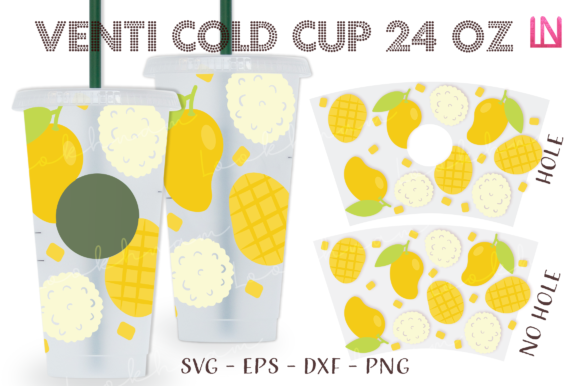
When I first unzipped the Mango Sticky Rice Venti Cold Cup Wrap download, I was hit with a wave of warm, sun-ripened color. The palette leans heavily on golden mango yellows, creamy coconut whites, and soft glutinous rice beiges, all anchored by tropical green leaves. As a graphic designer who regularly handles branding for food and beverage clients, I immediately recognized this as a graphic design asset with genuine personality. It doesn’t feel like a generic stock template; it carries the handmade, slightly imperfect charm that small businesses and crafters crave. The illustration style sits somewhere between modern flat vector art and a delicate watercolor texture, which gives it flexibility across both digital and printable projects.
The file itself is a digital download, and the product description is clear: no physical cup wrap ships. After purchase, you receive the files instantly. That’s a major plus for a designer on a tight deadline. The asset is specifically made to fit a 24 Oz Venti cold cup, so the dimensions are predetermined, eliminating guesswork. From a Graphics and Crafts perspective, this is a bridge asset—equally at home in a professional branding suite or a weekend Cricut project.
Tropical Nostalgia Meets Modern Branding
The visual mood of this cup wrap template is joyful, comforting, and undeniably summery. The mango sticky rice motif taps into a specific cultural dessert that feels both authentic and trendy. For a designer, this means the asset can inject instant emotional appeal into a campaign. It suggests slow afternoons, street food markets, and artisanal treats. The style is not overly polished—the rice grains have a sketch-like quality, and the mango slices feature soft gradients that mimic hand-painting. This keeps the design from feeling corporate, which is exactly what you want for a handmade business, a boutique boba shop, or a seasonal pop-up stall.
In a real client scenario, I’ve used similar templates to create a cohesive visual identity for a dessert café. The Mango Sticky Rice Venti Cold Cup Wrap would work beautifully as the hero element of a summer menu launch. It can anchor the entire packaging design, then be pulled apart as a decorative accent for social media graphics, loyalty cards, and even staff aprons. The warmth of the illustration makes the brand feel approachable and human, which is a huge trust builder for a small business.
Real Client Project: From Concept to Cup
Imagine a client comes to you—a local artisan drink maker who wants to launch a limited-edition mango sticky rice milk tea. They need a cohesive packaging concept that looks premium but still feels homemade. The Mango Sticky Rice Venti Cold Cup Wrap is the first asset I’d pull into my mockup. Because the template is already sized for a 24oz Venti cup, I can drop it into a product mockup within minutes, add the client’s logo and a custom drink name, and present a near-final visual. The strong tropical imagery immediately communicates the flavor, reducing the need for heavy text explanation.
For the supporting social media graphics, I’d extract the mango illustration from the wrap (if the file includes a PNG with transparency) and use it as a floating element behind a promotional quote. On a Canva template or an Instagram Story, the same mango slice becomes a recognizable brand stamp. For the printable design side, I’d scale the wrap motif down to create matching sticker sheets and round labels for the bottle caps. The consistency across touchpoints turns a simple cup wrap into a full brand identity system.
This is where the asset really shines: it’s not just a one-off decoration. It’s a mood-setter that can be deconstructed and reused across an entire campaign without feeling repetitive. The Crafts category placement is telling—it’s designed for makers and small business owners who need flexible, multi-use graphics.
Where the Design Asset Performs Like a Pro
In my testing, the Mango Sticky Rice Venti Cold Cup Wrap excels in applications that allow the artwork to breathe. Here are the project types where it becomes a secret weapon:
- Hero packaging graphics: On a full-wrap cup, the design reads as a complete illustration. The 24oz canvas is large enough to show off the rice texture and leaf details.
- Product mockups: Placing this template into a photorealistic cup mockup instantly elevates the presentation. The warm colors photograph well and catch the eye on Etsy listings or print-on-demand previews.
- Large-scale prints: If you scale the design up for a poster, a market stall banner, or a window decal, the hand-drawn quality becomes even more impactful. The slight imperfections add character rather than pixelation.
- Themed collections: Pair it with other tropical fruit illustrations to create a cohesive summer bundle for a creative marketplace or a client’s seasonal product line.
- Social media backgrounds: The soft, painterly background works as a beautiful backdrop for text overlays, especially on Pinterest pins and Instagram quote graphics.
- DIY crafts: For Cricut users, if the file comes in a layered SVG format, the design can be cut into heat transfer vinyl for tote bags or t-shirts. Even a simple PNG can be printed on sticker paper for a quick craft fair product.
From a visual hierarchy standpoint, the asset naturally draws the eye to the central mango cluster. This gives you a clear focal point to place a logo or a product name without fighting the composition. The surrounding rice and leaves create a soft frame, making the design feel balanced and intentional.
When to Tread Carefully: Design Pitfalls to Watch
No design asset is perfect for every scenario. After working with this cup wrap template in several mockup environments, I’ve identified a few areas where it requires extra attention:
- Small sizes: The intricate rice grains and leaf veins can turn into muddy specks when scaled down to a one-inch sticker or a favicon. Always test print at actual size before committing to tiny labels.
- Busy backgrounds: If you layer this design over a complex pattern or a heavily textured background, the warm tones can clash. The asset already has a lot of visual activity; it needs a clean, solid backdrop to pop.
- Low-contrast text overlays: The golden yellows and beiges are mid-tone colors. If you place white or light-colored text directly on the mango body, readability suffers. Adding a subtle dark overlay or a text shadow becomes essential.
- Minimalist corporate branding: A sleek tech startup or a modern law firm would find this design out of place. It’s not a neutral, geometric asset; it’s specific, warm, and crafty. Reserve it for brands that embrace a handmade aesthetic.
- Color accuracy in print: The digital file may look vibrant on screen, but CMYK conversion can dull the warm yellows. Always do a test print or request a proof if you’re ordering bulk cups from a commercial printer.
In my experience, the most common mistake is rushing the integration. The Mango Sticky Rice Venti Cold Cup Wrap is a strong visual element, and it needs thoughtful typography pairing. A script font can complement the hand-drawn feel, but too many flourishes will make the design chaotic. A clean sans-serif balances the organic shapes nicely. I always test the asset with a serif headline, a handwritten subhead, and a minimalist sans-serif body text to see which combination lets the illustration sing without competing.
Practical Designer Checks Before You Buy
Before I ever drop a new graphic design asset into a client project, I run it through a standard checklist. For this cup wrap template, I’d recommend the following:
- Check the file format: Confirm whether you receive a transparent PNG, an editable SVG, a layered PSD, or a flat JPG. A PNG with transparency is crucial for overlaying on other backgrounds. If you need to recolor elements, an SVG is non-negotiable.
- Test in black and white: Convert the design to grayscale. If the mango and rice blend into a single gray blob, the tonal contrast might be too weak for certain print methods. The design should still hold a recognizable silhouette even without color.
- Preview at 100% and 200%: Zoom in to check for pixelation, stray artifacts, or compression noise. A high-quality digital download should be crisp at its intended print size—300 DPI is the minimum for a cup wrap.
- Mock it up on a real cup: Use a template or a physical cup to see how the wrap curves around the cylinder. The design should not distort awkwardly at the seam. Check if the file includes a bleed area or if you need to add one yourself.
- Pair with different font styles: As mentioned, rapid-fire test with a serif, a sans-serif, a script, and a display font. This reveals whether the asset fights for attention or complements your typography.
- Verify commercial licensing: Many digital products on Etsy or creative marketplaces come with a personal use license only. Always read the fine print. For client work, you need a commercial license that allows you to incorporate the design into a product that will be sold.
- Check the dimensions: The product states it fits a 24 Oz Venti cold cup. Measure your actual cup if you’re sourcing from a different supplier. A millimeter off can ruin the wrap alignment.
Licensing and Commercial Use: The Make-or-Break Factor
As a designer who frequently creates brand identity systems for paying clients, I can’t emphasize enough how critical licensing is. The Mango Sticky Rice Venti Cold Cup Wrap falls under the Crafts and Graphics categories, which often means it’s targeted at hobbyists and small business owners. However, many crafters eventually sell their creations at markets or online, and that’s where the line between personal and commercial use gets blurry.
Before using this template on a client’s product packaging, confirm that the seller allows commercial use. Some digital downloads include a limited commercial license that permits up to a certain number of physical product sales. If your client is a growing brand, you may need an extended license. The product description doesn’t specify the license terms here, so I’d contact the seller directly before including it in a final deliverable. The last thing you want is a copyright claim on a launched product.
Why This Asset Belongs in a Crafty Designer’s Toolkit
After spending significant time integrating the Mango Sticky Rice Venti Cold Cup Wrap into mock projects, I’m convinced it’s a valuable addition for the right niche. It’s not a universal solution, but it fills a specific gap beautifully. For designers who serve small business branding, food and beverage concepts, and handmade product lines, this asset cuts down concept time dramatically. It delivers a ready-made illustration that feels bespoke, not mass-produced.
The Crafts angle is equally strong. If you’re a digital seller or a print-on-demand creator, you can use this template to build a quick product listing: a single cup wrap design, a matching sticker set, a tote bag graphic, and a phone wallpaper—all from one core illustration. The Graphics quality holds up across these formats, provided you follow the cautionary notes about scaling and contrast.
Ultimately, what I appreciate most is the emotional authenticity. The mango sticky rice theme isn’t just a flavor; it’s an experience. The design asset invites the viewer to imagine the taste and texture, and that’s powerful marketing. In a real client presentation, that emotional hook can be the difference between a lukewarm concept and a design that the client falls in love with instantly. For a digital download, that’s a rare and welcome quality.
Final Assessment: Sweet, But Use It Thoughtfully
The Mango Sticky Rice Venti Cold Cup Wrap earns a solid recommendation from a working designer’s perspective, with the caveat that you must test it thoroughly before production. The design is appealing, the mood is on-trend, and the craft-friendly nature opens up a world of creative possibilities. It won’t suit every brand, but for the right client—a summer drink launch, a dessert pop-up, a handmade sticker line—it’s a total gem. Pair it with clean typography, respect its scale limits, and you’ll have a graphic design asset that feels far more valuable than its price tag. Just remember to check that commercial license, and you’ll be ready to serve up something delicious.