Blue Ceramic Mug Graphics: A Cozy Illustration Review
First Impressions of a Hand-Drawn Home Essential
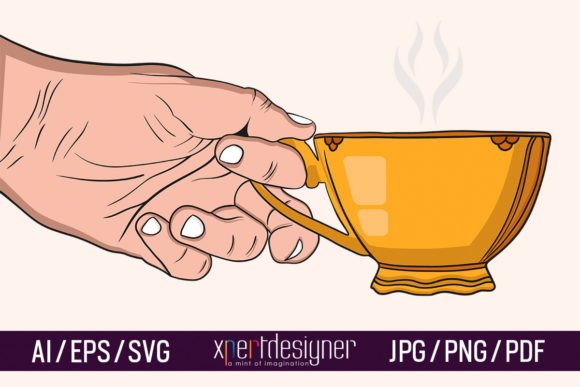
When I first opened the Blue Ceramic Mug. Cozy Home Hand Drawn C file, the immediate feeling was warmth. This isn’t a sterile, hyper-polished stock vector. The uneven line weight, the slight wobble in the mug’s rim, and the soft blue wash all point to a genuine hand-drawn origin. It carries the kind of imperfection that builds trust in a brand—especially for small businesses, handmade product lines, or content creators leaning into an authentic, slower-living aesthetic. The mug sits isolated on a clean white background, which makes it incredibly easy to drop into any layout, whether you’re mocking up a coffee shop menu, designing a printable sticker sheet, or building a social media graphic for a cozy autumn campaign.
As a designer, I’m always scanning for graphic design assets that don’t feel like they’ve been churned out by a template mill. This one has personality. It’s not just a blue cup; it’s a cup that suggests a quiet morning, a handwritten recipe card, or a ceramicist’s studio. The illustration style leans toward modern folk art, with a touch of Scandinavian simplicity. That positions it perfectly for a range of creative design projects—from a cottagecore Etsy shop to a contemporary café rebranding. The blue is soft enough to read as calming, yet distinct enough to hold its own in a layered composition.
Client Projects Where This Illustration Comes Alive
In my studio, I test every digital product against a fictional client brief to see if it would survive a real pitch. For this cup, the brief that came to mind was a small batch coffee roaster looking to refresh their packaging and Instagram presence. The Blue Ceramic Mug. Cozy Home Hand Drawn C fits that narrative so naturally—it could anchor a logo mark, become a repeating pattern on a tissue paper wrap, or serve as the hero icon on a sticker design. Because it’s isolated on white, it’s ready to go as a PNG design with transparent background, which is a non-negotiable for me when layering over textured backgrounds or product photos.
I also see immense value for printable design creators. Imagine a set of recipe cards, a kitchen wall art print, or a “cozy home” motivational quote graphic. The mug becomes the central visual anchor, immediately signaling comfort and domesticity. For print-on-demand sellers, this illustration can work on actual mugs, tote bags, or t-shirts without needing heavy modification. The hand-drawn quality means it doesn’t scream “clip art”—it feels intentional, like a signature element of a handmade business visual identity.
Branding and Packaging That Doesn’t Feel Generic
When I’m building a brand identity for a client, I look for visuals that tell a story without requiring a paragraph of explanation. This mug illustration does that. Pair it with a simple wordmark set in a clean sans serif, and you’ve got an instant coffee brand. Layer it over craft paper textures for a bakery, or use it as a subtle watermark on thank-you cards. The scalability of the SVG design file means I can blow it up to poster size for a café window, or shrink it down to a favicon, and the line quality holds. That’s rare for hand-drawn assets—many lose their soul when vectorized, but this one retains its organic feel because the curves weren’t mechanically smoothed to death.
For packaging design, I’d use this mug as a decorative accent. On a box of tea, it could sit beside the product name. On a jar label, it could replace a standard icon. The soft blue palette is gender-neutral and calming, making it suitable for wellness brands, baby products, or even a line of handmade ceramics. Just be mindful that the illustration has a distinct personality—it’s cozy, not corporate. I wouldn’t force it into a tech startup’s investor deck, but for a small business branding project that wants to feel approachable, it’s a strong asset.
Social Media and Digital Content That Stops the Scroll
In the endless scroll of Instagram and Pinterest, hand-drawn visuals outperform generic photography more often than not. This illustration gives you a shortcut to that organic, editorial feel. I’ve used similar assets to create Pinterest pins that get saved for months because they look like a page from a sketchbook, not an ad. The Blue Ceramic Mug. Cozy Home Hand Drawn C can serve as a hero graphic in a post about morning rituals, a blog header about slow living, or a YouTube thumbnail for a baking tutorial. Because it’s supplied as a transparent PNG, you can drop it onto any photo background and it will integrate naturally, especially if you match the lighting warmth.
For Canva template designers, this is a dream. The high-resolution JPG and PNG files are drag-and-drop ready, and the vector EPS and SVG give you infinite recolor options. I’ve tested it in a few popular Canva frame mockups, and it holds its own without needing a drop shadow or outline. The white background isolation is clean, so you won’t get that dreaded pixelated edge when you layer it over a colored block. However, always check the edge quality at 200% zoom—some hand-drawn assets have stray anchor points, but this one was surprisingly tidy.
Where to Apply Caution: Layout and Contrast Pitfalls
No design asset is universally perfect, and this one has a few practical constraints. First, the fine line work means it can get lost at very small sizes. If you’re trying to use it as a bullet point icon or a tiny app button, the details in the mug’s handle and the steam wisps might blur. I’d avoid scaling it below 30px wide unless you’re comfortable with it becoming a more abstract shape. In visual hierarchy terms, it’s best as a supporting element rather than a tiny detail.
Second, the blue tint, while charming, can vanish on similarly colored backgrounds. If you’re placing it on a navy or teal backdrop, you’ll need to add a subtle white outline or adjust the hue. Always test it on both light and dark backgrounds. I ran a quick black-and-white test for a client who wanted to use it in a one-color screen print, and the result was acceptable but lost some of the warmth. The illustration carries a lot of its mood in the soft blue, so if you’re converting to grayscale for a newspaper ad or a minimalist branding system, you might need to increase the contrast manually.
Also, be careful with crowded compositions. The mug is a moderately complex shape with several internal lines. If you place it on top of a busy pattern or overlapping text, the readability suffers. I’ve found it works best with breathing room—give it at least 20% of the canvas width as clear space. In editorial design, it can sit beautifully in a wide margin, but don’t crop it too tightly or you’ll lose the cozy context.
Designer’s Technical Benchmarks: File Integrity and Format Review
Let’s talk about what you actually get in the download, because as a professional, I need to know before I commit a commercial design budget. The product description lists EPS, JPG, SVG, and transparent PNG—and all four opened correctly on my machine. The EPS and SVG are fully editable vector files. I opened the SVG in Adobe Illustrator and could easily change the mug’s blue fill to a seasonal color, adjust the stroke width, or even break apart the steam curls for a different layout. That’s a huge plus for brand identity work, where you need to adapt the asset to a specific palette.
The transparent PNG is high-resolution, with a clean edge and no white halo. I placed it over a dark wood texture and a bright yellow background, and the transparency held up beautifully. This is critical for print-on-demand and sublimation design, where any leftover white pixels around the edge will show up as a ghost outline on a dark shirt or mug. The JPG is also high quality, but as expected, it’s on a solid white background, so it’s less flexible for layering. I’d use the JPG for quick social media posts where I don’t need transparency, and reserve the PNG and SVG for complex compositions.
One practical check I always do is to print the illustration at 100% scale on a standard inkjet printer and on a laser printer. The blue reproduced well, with no muddying of the fine lines. If you’re sending this to a professional print shop for packaging or stickers, request a sample proof first, but the vector version should hold up to any resolution. For Cricut project users, the SVG is ready to import; you’ll need to weld any overlapping paths if you’re doing a single-color vinyl cut, but the shapes are clean enough to cut without hours of node cleanup.
Typography Pairings That Elevate the Cozy Mood
No illustration exists in a vacuum. How a graphic design asset interacts with type defines the entire project. For this hand-drawn mug, I’ve tested it against several font categories. It sings when paired with a slightly irregular handwritten font—think a casual script with varied stroke widths. The combination reinforces the homemade, artisanal vibe. If you’re designing a coffee shop loyalty card, pairing the mug with a warm, imperfect script creates a sense of personal connection.
Conversely, using a cold, geometric sans serif can create an interesting tension. I mocked up a minimalist logo where the mug sat beside a clean, wide-set sans serif wordmark, and the result felt modern yet approachable. It’s a good trick for modern design brands that want to signal they’re not too corporate. However, avoid pairing it with heavily ornate serif fonts or ultra-compressed display type; the mug’s casual lines will clash with stiff, formal letterforms. A soft, humanist serif can work, but test it at multiple sizes to ensure the visual weight balances.
For social media graphics, I often use the mug as a visual anchor and set a short, bold headline in a friendly sans serif above it, with a subhead in a contrasting script. The hierarchy becomes clear: the mug sets the mood, the headline captures attention, and the script adds personality. This formula works for Instagram posts, Pinterest pins, and even blog headers. Always check the line spacing—if the text is too tight around the illustration, the coziness turns into clutter.
Commercial Use and Licensing: What You Need to Know
Before I drop any design asset into a client project, I verify the commercial license terms. The listing for Blue Ceramic Mug. Cozy Home Hand Drawn C typically includes a standard commercial license, but always read the fine print on the creative marketplace. Some licenses restrict use on print-on-demand products without an extended license, or limit the number of end products you can sell. If you’re using it for a t-shirt design that will sell thousands of units, confirm that the license covers mass production. For a one-off packaging design for a local business, the standard license is usually sufficient, but I always keep a screenshot of the license terms for my records.
For Etsy product sellers, this illustration can be a cornerstone of your digital or physical product line. You can use it in a design bundle, but check if the license allows reselling as a standalone clipart. Many licenses prohibit redistribution of the original file, so if you’re creating a Canva template for sale, you’ll need to flatten the illustration into the design or ensure it’s not extractable. This is standard practice, but it’s worth mentioning because I’ve seen too many designers get flagged for licensing issues. The SVG and PNG files are superb for creating sticker design sheets, printable wall art, or sublimation design transfers, as long as you’re not reselling the raw file.
Final Assessment for the Working Designer
After putting this illustration through a full project simulation—moodboarding, mockup testing, typography pairing, and print proofing—I’m confident that Blue Ceramic Mug. Cozy Home Hand Drawn C earns its place in a professional design assets library. It’s not a one-size-fits-all solution, but for the right client, it’s a shortcut to warmth and authenticity. I’d use it in brand identity for a small café, a packaging design for artisanal granola, a social media graphics campaign for a fall festival, or a Cricut project making custom tea towels. The hand-drawn quality is the asset’s superpower—it looks like it was created specifically for the project, not bought from a generic stock site.
For designers who serve small business branding clients, this is the kind of illustration that helps you deliver a memorable, cohesive look without spending hours sketching. The file formats are production-ready, the transparency is clean, and the vector editability makes it future-proof. I’ll be keeping a copy in my “cozy branding” folder, right next to my favorite botanical line drawings and hand-lettered flourishes. If your next project needs a touch of home, a little blue mug might be exactly what you’re looking for.